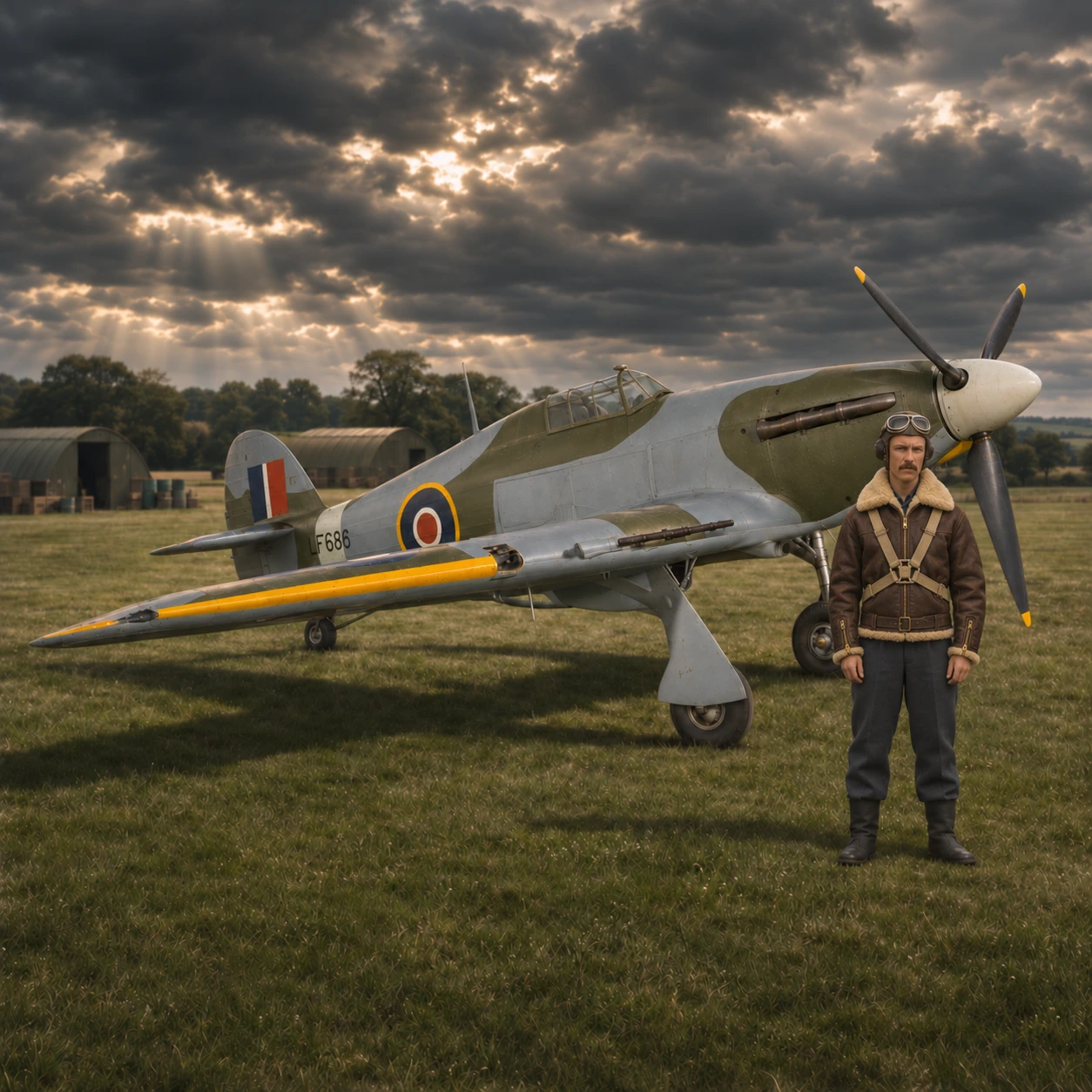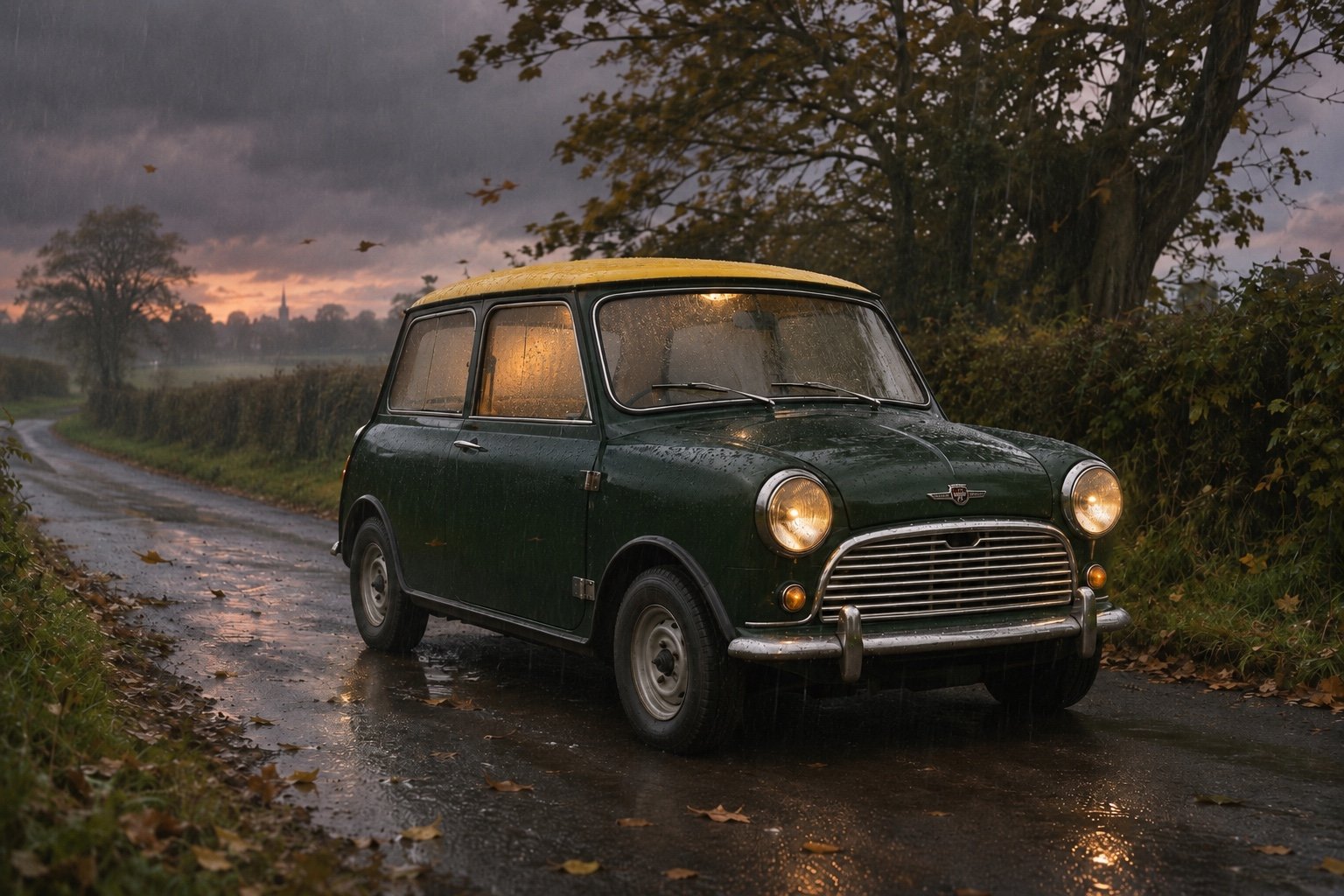
The illustrations on this page are AI reconstructions. There are no photographs of the encounter; the Mini, the dog at the window and the scene with the Dockers are imagined illustrations of the story.
A Mini was never the ideal car for a romantic evening. Still, when you are young, a lack of space seems more like a challenge than a reason to go home.
I had parked in Hunscote Lane, near Wellesbourne Mountford Airfield, with a girl whose company interested me considerably more than the weather. The Mini was my metallic Lincoln Green one, registration 9986 UE, with its truck-yellow roof and no hubcaps. It was hardly a discreet colour scheme, but on a dark country lane I was not expecting much of an audience.
I was about eighteen, and I had met her while tractor driving for Ted Edgar on the farm. At that time of year, I was spinning out the potato rows, bringing the potatoes to the surface for the women following behind to collect. She was an attractive young blonde girl, and I had found a reason to take rather more interest in the potato harvest.
Outside, the weather was wild. Rain lashed the car, the wind howled, and the trees in the little copse beside us were being thoroughly battered. This was a proper storm, the sort of night when the possibility of a tree coming down did not seem at all fanciful.
Inside, the windows were steaming up. We had other things on our minds.
Moving from the driver's side to the passenger's side required some ingenuity. Anyone who has tried it in an early Mini will understand. There were limbs to rearrange, obstacles to negotiate and not quite enough car in which to do it. Enthusiasm made up for the shortcomings of the design.
An unexpected visitor
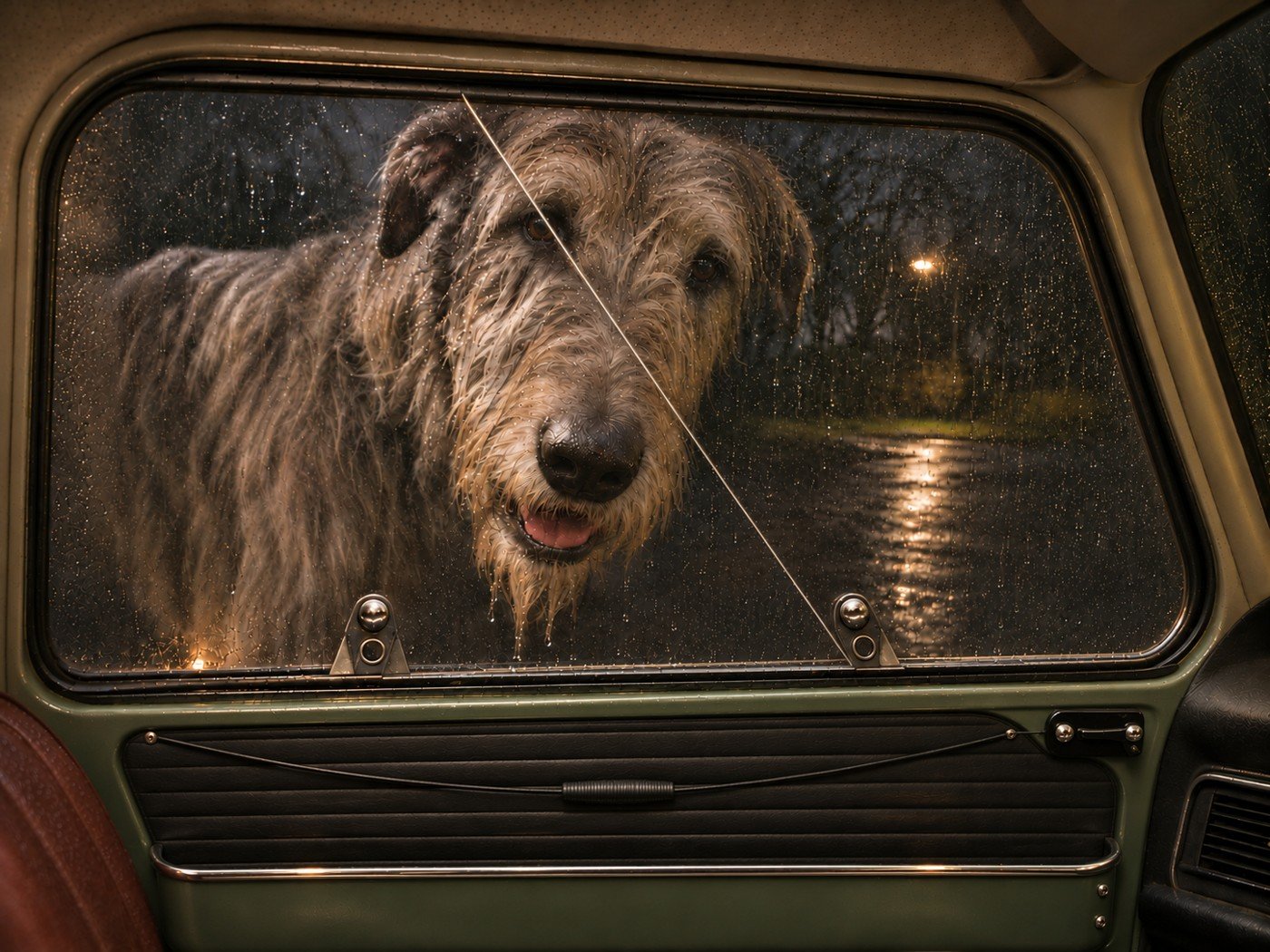
We had reached the point where the storm outside had ceased to matter when I became aware of something beside us.
I turned my head.
There, pressed close to the window, was an enormous shaggy face. Wet hair, a long muzzle and slobber against the glass. It seemed to be looking down at us, which, from inside a Mini, was entirely possible.
For a moment, all I could think of was The Hound of the Baskervilles. I had no idea what this thing was or where it had come from. It had simply appeared out of the dark, inches from my face.
We were both petrified. Whatever romantic intentions we had entertained disappeared immediately. The Mini had suddenly become a very small place in which to be frightened.
Then the face was gone. The creature withdrew into the night, leaving two thoroughly rattled young people listening to the wind and wondering what else might come out of the darkness—or down from the trees.
Between the beast at the window, the driving rain and the fear of a tree falling on us, the evening had lost its appeal. The weather had, quite literally, dampened our ardour.
We decided to go home.
The beast explained
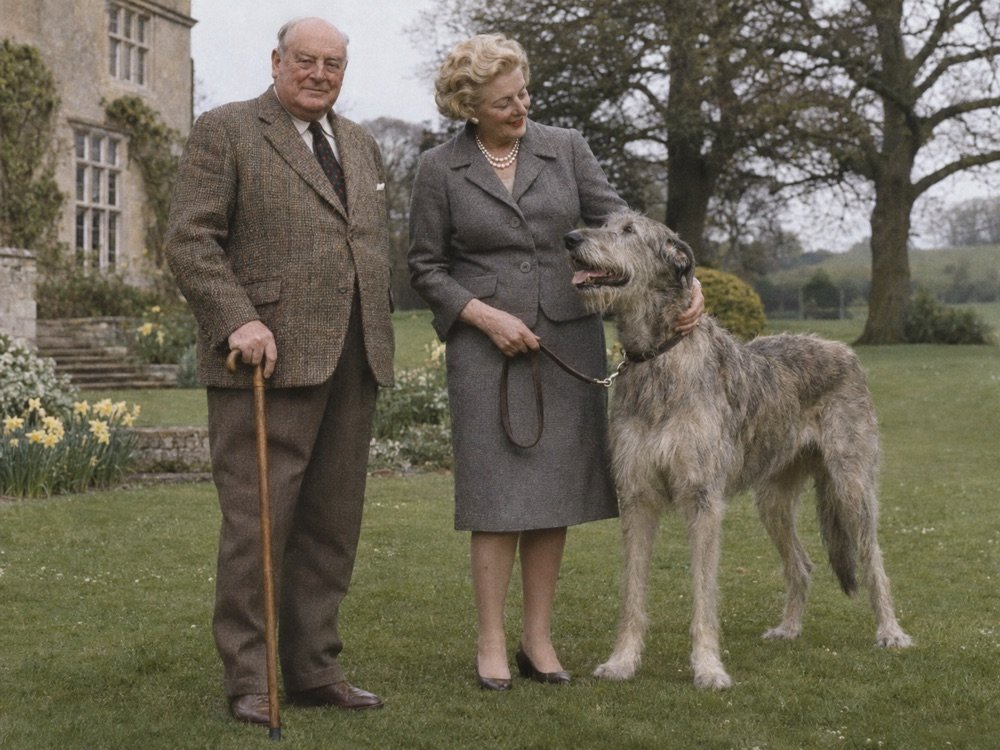
The following day, over a cup of tea, I told my boss, Ted Edgar, what had happened. Ted was a farmer, and not a man likely to be troubled by a supernatural explanation when a practical one would do.
He had already had a telephone call from our neighbours, Sir Bernard and Lady Docker. Their Irish wolfhound had gone missing.
So that was my beast.
In daylight, with the explanation supplied, it was all rather less alarming. An Irish wolfhound is an imposing dog, but this one had probably been as unsettled by the storm as we had been by its arrival. Perhaps it had come looking for shelter or company. I cannot say. I only know that it found us.
The relief was considerable. So was the amusement, once my nerves had recovered sufficiently to appreciate it.
I had set out hoping for a memorable evening with a girl. Instead, the face I can still see most clearly is a wet, bearded one peering through the window.
The Dockers had lost a dog. I had lost my nerve. Presumably, only one of us was pleased when it turned up.
A second attempt
That was not quite the end of the story.
Since nothing much had happened on our first outing, we arranged to meet another evening. This time, I intended to be better organised. I had identified at least one practical difficulty with our previous arrangements: the Mini.
I asked Dad if I could borrow his Rover 3-litre.
Now that was a car with room in it. I collected her in the Rover, and I think she was quite impressed. I certainly was. Borrowing Dad’s car had briefly elevated me into a rather better class of boyfriend.
My notion of a date was fairly uncomplicated in those days. I had little money for dinners, and even a trip to the pictures was a considerable undertaking. Going out with a girl generally meant finding somewhere to park and hoping for a little romance. At eighteen, my entertainment programme relied heavily on enthusiasm and somewhere quiet.
We found another spot. I had no wish to return to that particular lane. Once a location has produced something resembling the Hound of the Baskervilles, it rather loses its romantic appeal.
The Rover was a revelation. There was space to move, the seats were beautifully upholstered, and, unlike the Mini’s, they reclined. Compared with our previous accommodation, this was five-star luxury.
For a while, the evening was going very well indeed.
Then I happened to glance down towards the footwell.
She had taken off her boots and stockings, and I noticed her feet. I looked again. Some of her toes were joined by skin. I had never seen anything like it and, in my considerable ignorance, did not know what to make of it.
“Oh, that’s unusual,” I said.
“Yes, I’ve got webbed feet,” she replied.
I asked whether the skin could be separated so that her toes were no longer joined. She told me she had already had that done, but that it had grown back.
Unfortunately, my eighteen-year-old brain had already supplied an entirely unhelpful association.
Donald Duck.
I tried to dismiss him. He stayed.
There I was, in a beautifully upholstered Rover, with a nice girl and every practical difficulty apparently resolved, while somewhere inside my head Donald Duck was putting on a performance.
I concentrated on the girl. I admired the upholstery. I made a determined effort to recover the mood.
Donald remained available for comment.
It is remarkably difficult to sustain a romantic atmosphere when your imagination has decided to show cartoons. Dad’s Rover had reclining seats, generous legroom and almost everything a young man could want. A switch for turning off Donald Duck would have completed the specification.
Our second attempt was losing momentum too.
I cannot remember how gracefully I brought the evening to a close. Perhaps I did not manage it very gracefully at all. We nevertheless had a comfortable drive home, and I dropped her off.
I do not believe I saw her again.
She was a nice girl. Looking back, my reaction says rather more about my ignorance at eighteen than it does about her feet. I knew very little about life, and borrowing a better car had done nothing to improve matters.
Two evenings, two cars, and two interruptions to my romantic ambitions. The first involved an actual animal. For the second, I had managed to provide my own.