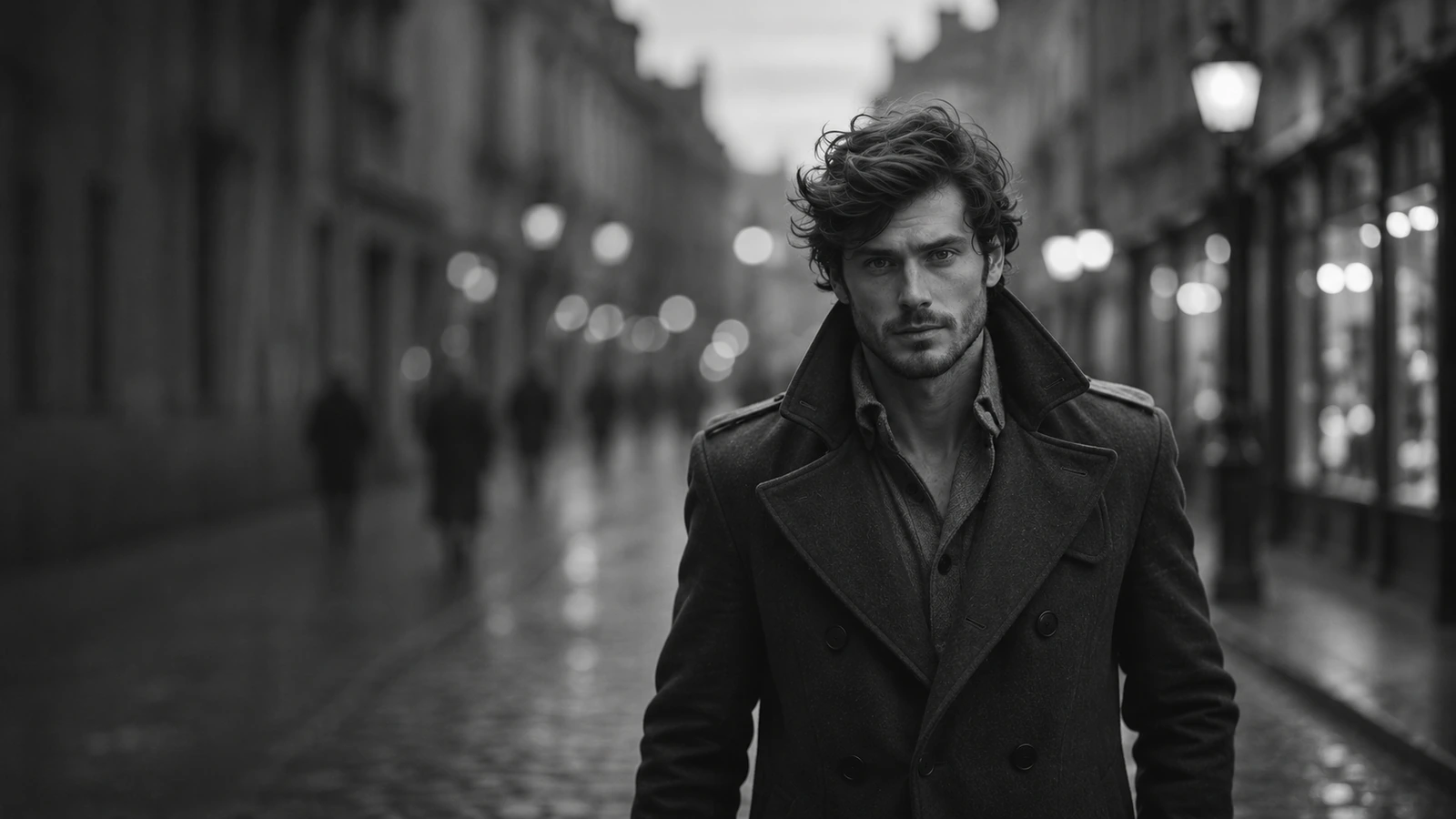
A face can be pin-sharp and still get lost in a busy photograph. Look at what’s behind it. A row of shop lights can pull your eye away from the face, or it can dissolve into a soft pattern that helps the subject stand out. That’s where bokeh comes in.
Bokeh describes the character of the out-of-focus areas in a photograph. The word comes from the Japanese boke, meaning blur or haze. Out-of-focus highlights make that character easy to see. A point of light may become a soft disc, a shape with a bright rim, or a little polygon, depending on the lens and aperture.
Start with distance
Move your subject away from the background. A person standing against a wall and the same person standing several metres in front of it can give you two very different photographs at the same aperture. Moving closer to your subject can help too. For a street portrait at dusk, try placing your subject well ahead of shop windows, lamps or reflections so the lights have room to fall out of focus.
Choose how much stays sharp
Try a wide aperture such as f/1.8 or f/2.8 and focus on the nearer eye. Then stop down and compare. At the widest setting, especially close up, the far eye may soften more than you want. An 85mm or 135mm lens can work nicely for portraits because its narrower angle of view lets you pick out a smaller part of the background. You can get pleasing blur with a kit zoom too, especially when there’s plenty of space behind the subject.
Look at the shape of the highlights
When you stop down, the shape of the aperture blades can show up in the highlights. Rounded blades can keep them more circular. The lens itself also affects whether the edges of those highlights look soft or sharply defined. Take a moment to check what the brightest spots are doing. Moving a step to one side may be all it takes to get a distracting light away from someone’s head.
Get it as close as you can in camera
Editing can soften a distraction, but it’s easy to leave a halo around hair or coat edges. I’d start by taking three frames of the same subject. Keep the first as it is, move the subject farther from the background for the second, and change the aperture for the third. Compare where your eye goes first. That will tell you more than counting the circles.