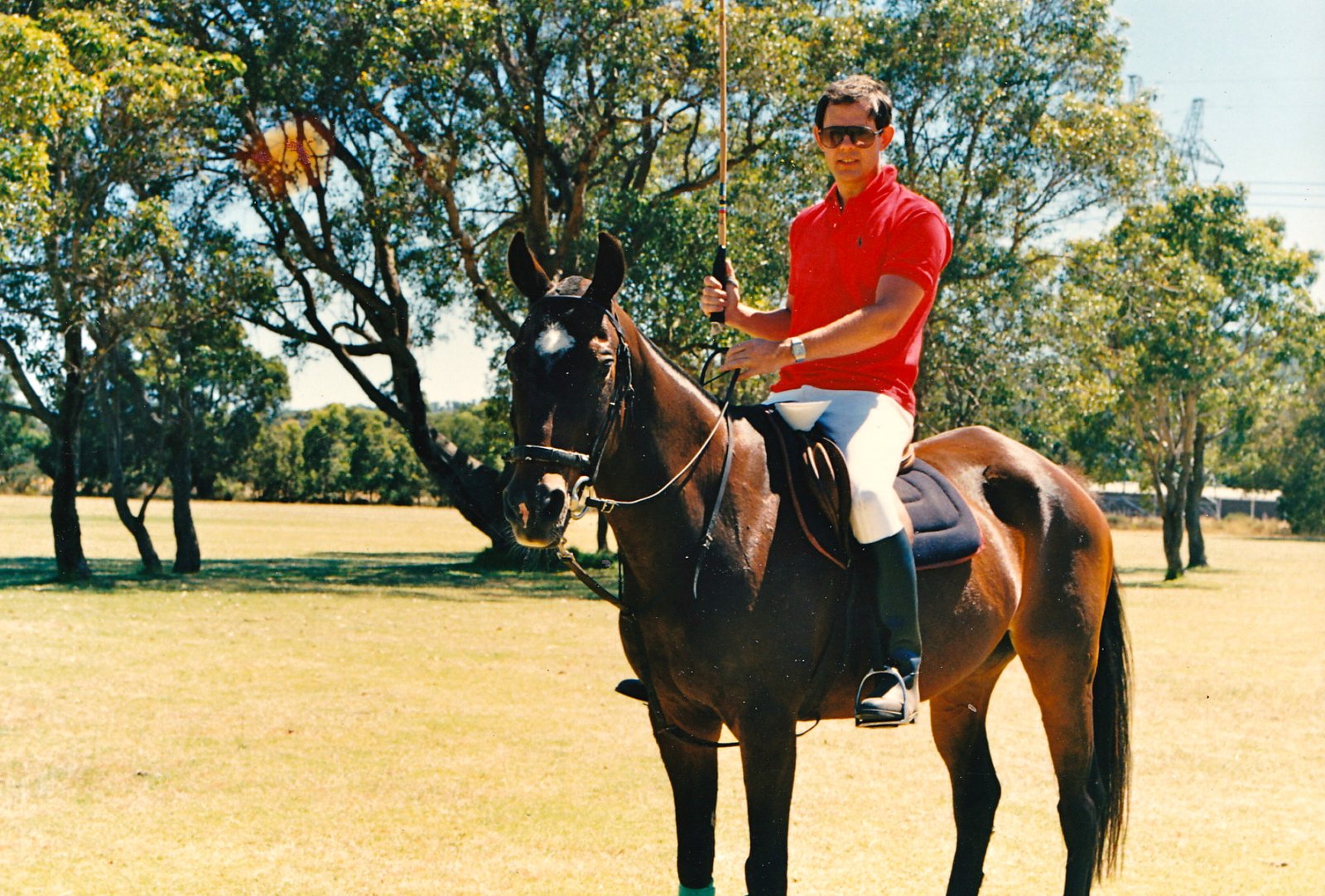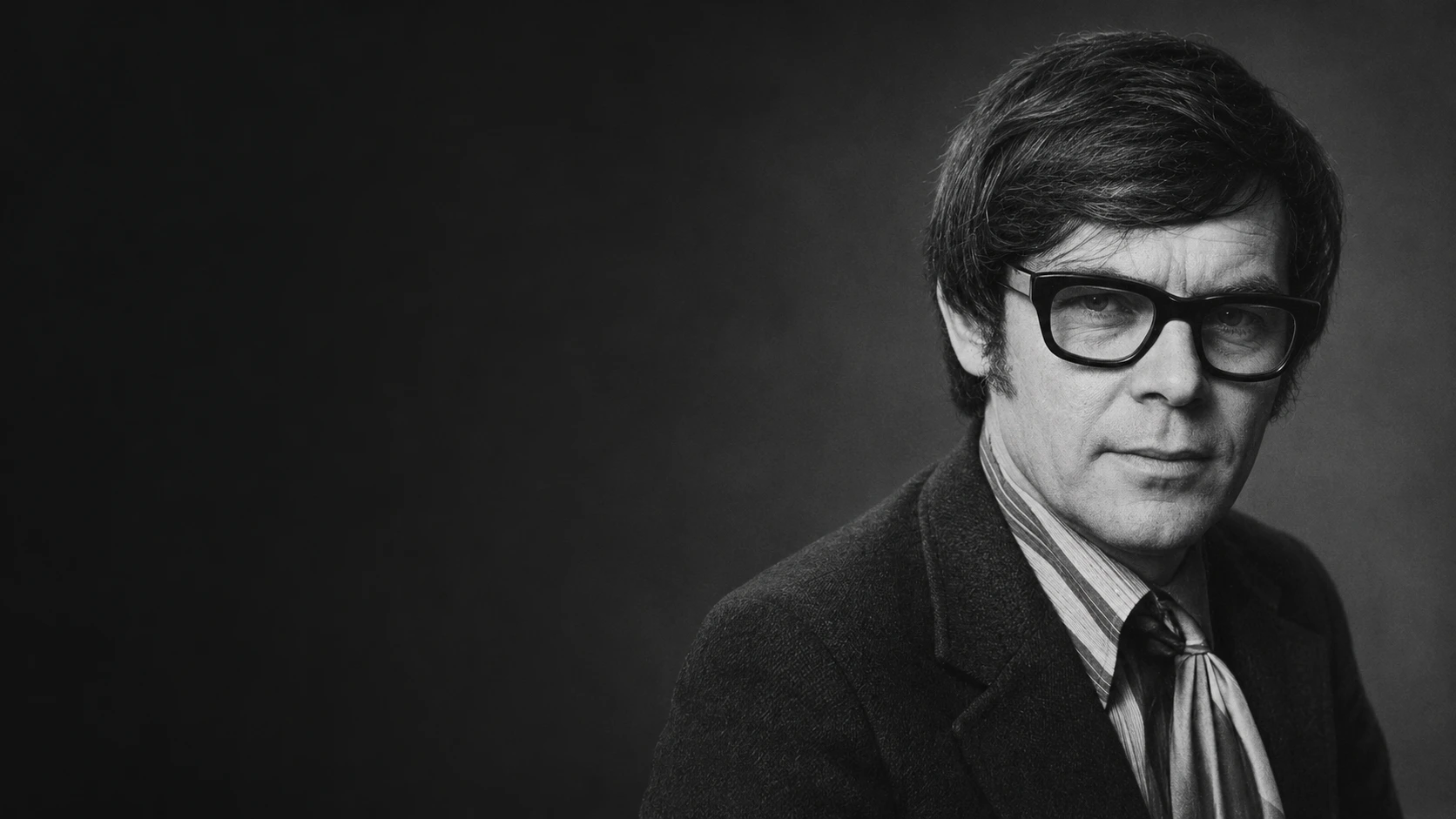
Some people seem to have enough stories for several lifetimes. Hugh Miller was one of them.
I met him through Brian Goodchild’s Cameras in Stratford-upon-Avon, where I worked after leaving school. He was a regular customer, a writer of books about magic and a partner in a London magic business with the well-known magician Harry Stanley. We became friends.
He had a Glasgow accent and was a tremendous raconteur. There always seemed to be eager listeners around him, hanging on every word. Hugh enjoyed an audience, and he knew how to keep one.
He loved his whisky and drank a great deal. From the time I knew him, I never knew him to own a car or drive. But he certainly got about in other ways. Photography, magic, books and television all found a place in his life.
A door into another world
I was living in Ettington and finding my way into wedding and portrait photography. Hugh lived nearby in Wellesbourne Hastings, in a lovely old thatched house—very English. My family had previously lived at RAF Wellesbourne Mountford, so the area was familiar to me. Whether Hugh owned his house or rented it, I never knew.
He told me that a house just across the main road was where John Profumo met Christine Keeler. I never independently confirmed that, but it was another memorable detail from my visits to Hugh.
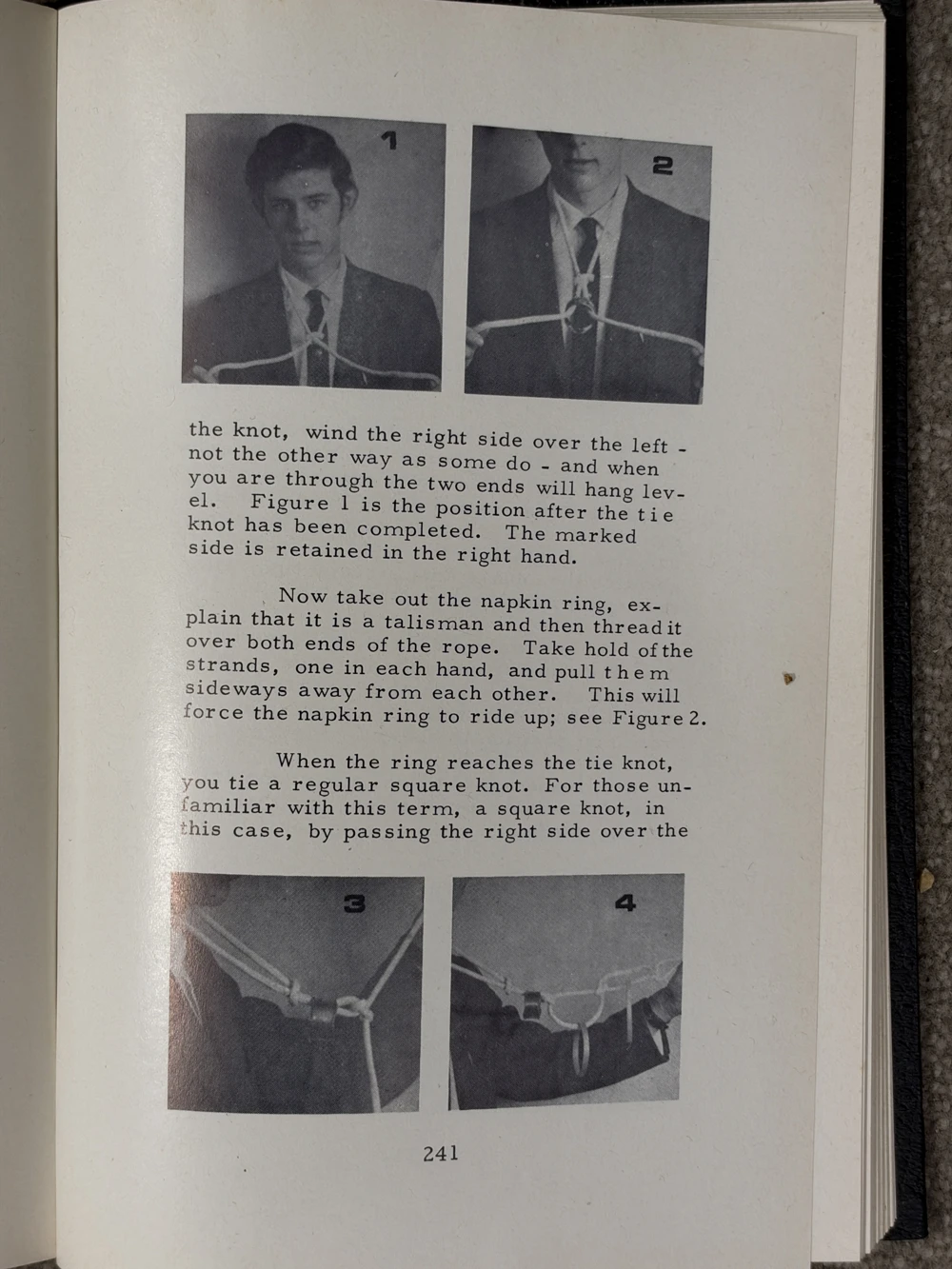
At his house, I helped photograph the demonstrations for The Art of Eddie Joseph, using a Pentax Spotmatic. We took turns behind the camera: I photographed Hugh, and he took some pictures of me holding props and demonstrating the effects. It was an exciting introduction to professional work.
He also took me to his shop in Wardour Street and to the Magic Circle. For a young lad working in a Stratford camera shop, this was quite an education.
Later, Hugh suggested the name Studio 5 for my photography business and designed the logo for me too. His encouragement mattered. He helped me take my work seriously and gave me opportunities I might otherwise never have had.
The cameras, the portraits and my rather ambitious change of prices belong to Corn Plasters, Cameras and Studio 5. This is the story of the man who helped me along the way.
The books I still have
Every time I saw Hugh, he would give me an autographed copy of his latest book. There were plenty of books, and I still have them.
Looking through them now brings back the friendship rather more vividly than a list of publishing credits ever could. Among them are The Open City, Ambulance, Kingpin, Victims, Snow on the Wind and his EastEnders novels, alongside books on magic and gambling.
My first British edition of The Open City states that it was published by New English Library in 1973, and Hugh’s inscription to me is dated April of that year. Other signed books take the collection through to 1989. Holding them now brings home just how long ago all this was.
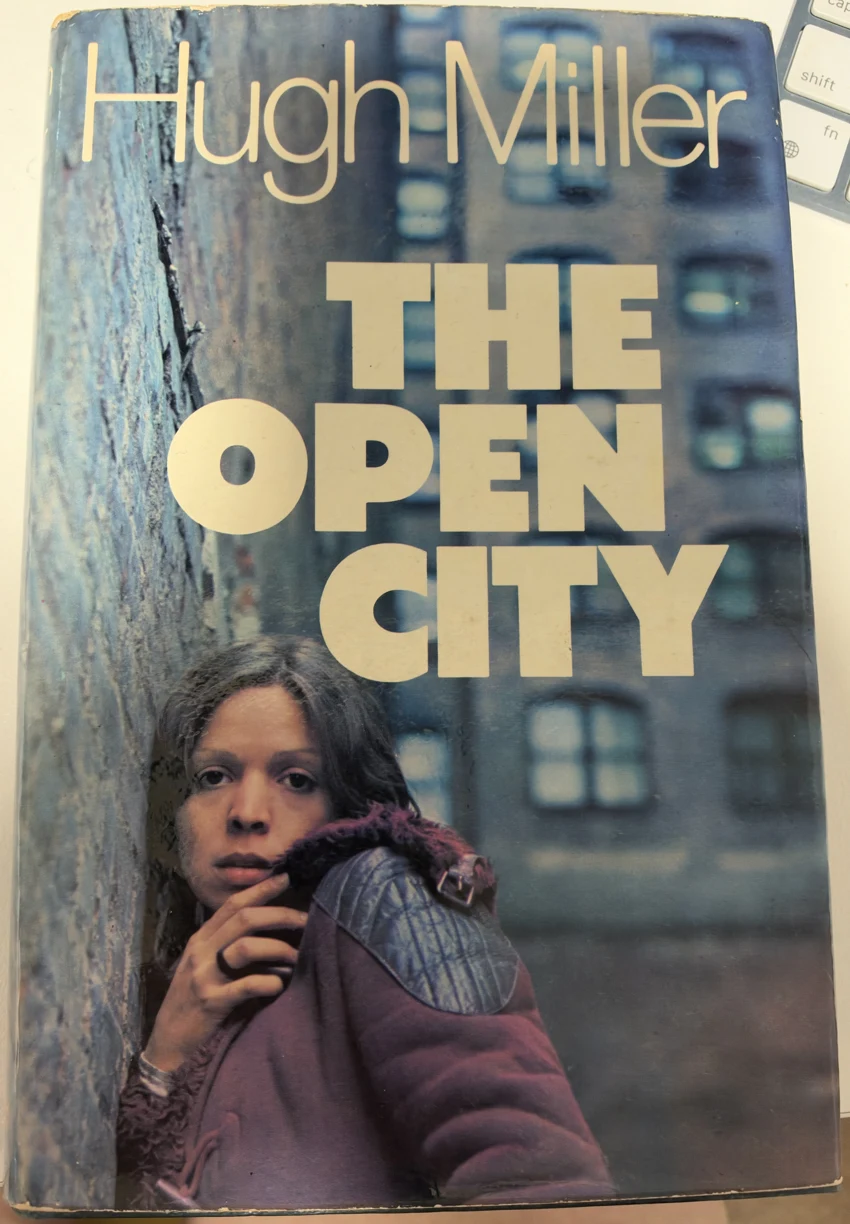
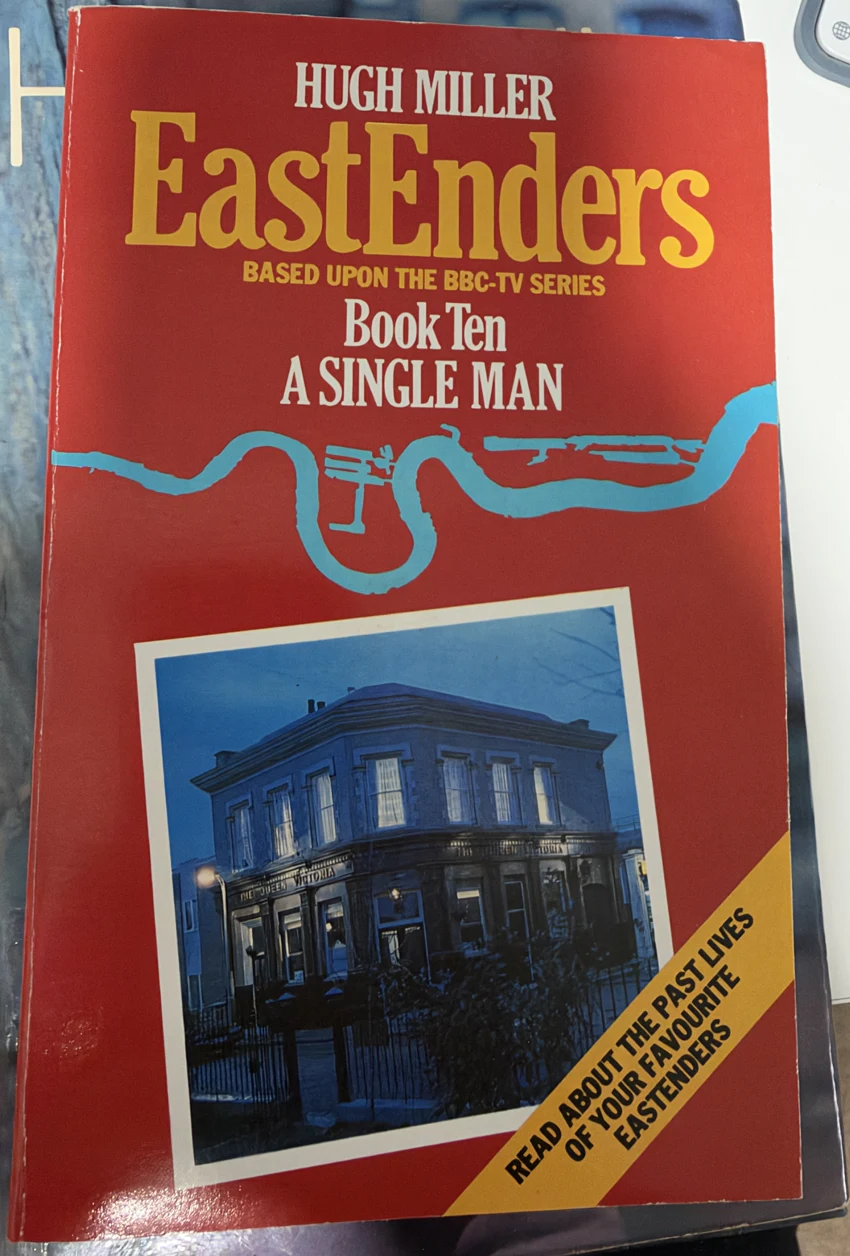
The jackets provide a reminder of how varied his working life had been. The biography on The Open City mentions television, the Civil Service, work as an assistant to a pathologist, and a Soho partnership supplying professional magicians. His knowledge of dishonest gambling also appears in the publisher’s account.
The author biography in my EastEnders hardback describes him as both a novelist and a scriptwriter on the television series. Whatever remained uncertain about some of Hugh’s stories, his published work was real.
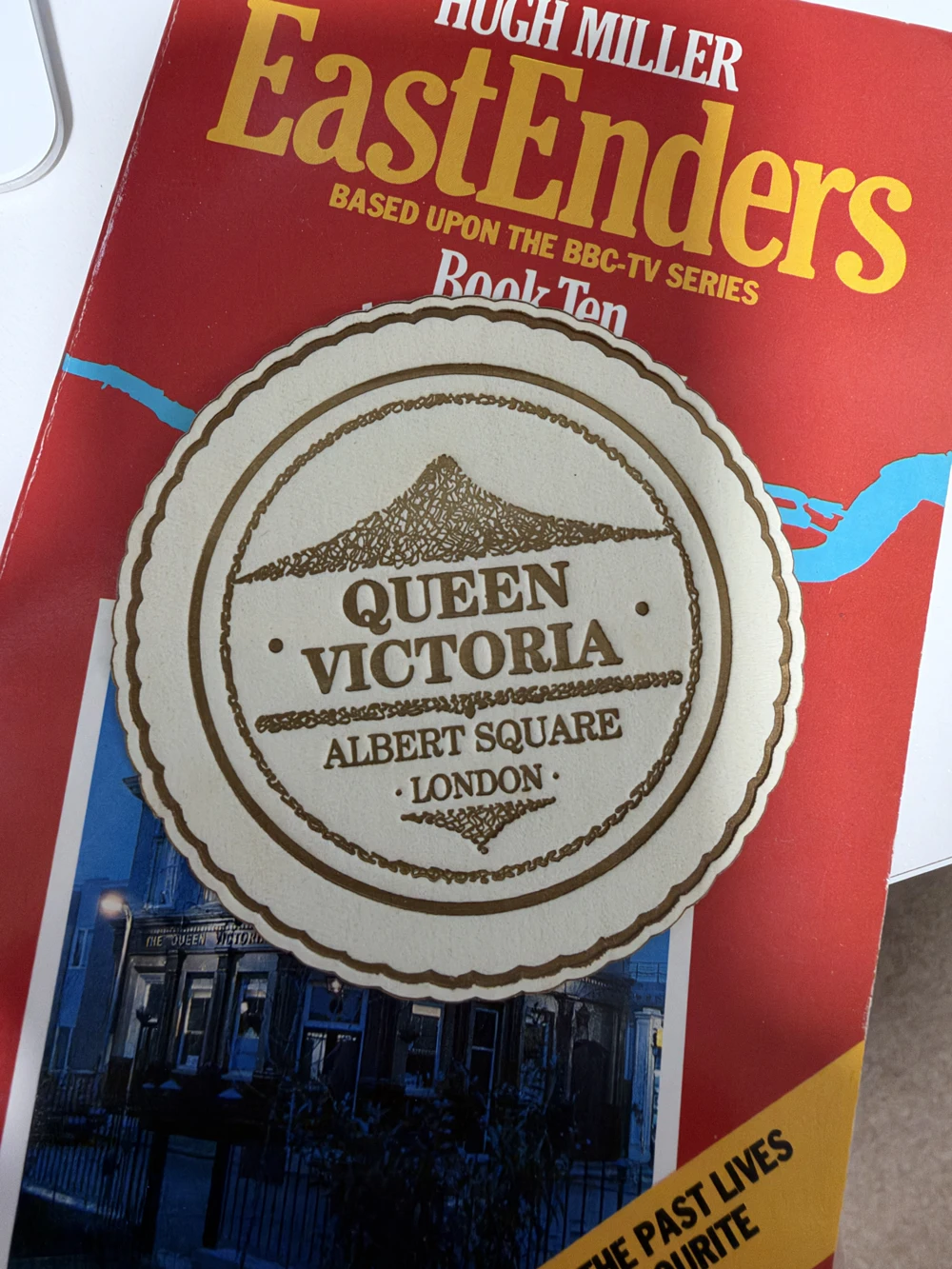
One of his EastEnders books even came with a beer mat from the Queen Vic tucked inside. I still have that too.
Hugh’s stories
Hugh told me he had dated Dusty Springfield. That was one of the unexpected connections that came up in his conversation.
He also spoke about Minder and his friendship with Dennis Waterman. He told me that Leon Griffiths was a pseudonym he used. I remember what he said, but I have not been able to substantiate that claim, and I cannot confidently describe what involvement, if any, Hugh had with the programme.
He told me he wrote under a woman’s name too, although I can no longer remember it. Even his names seemed to have stories behind them.
Then there was The Corries. Hugh told me he had been a member. I never heard him play, or even saw him with an instrument. Perhaps he had a washboard out the back.
He was an enigma. Some of his accounts were easier to establish than others, but listening to him was rarely dull.
Modest surroundings, rather good equipment
For someone with so many books to his name, Hugh seemed to live fairly modestly. There were few obvious trappings of wealth, although I imagined his writing must have earned him a comfortable living. Before I left for Australia, he had been living for some time in a modest flat at St John’s Court, a low-rise development in Warwick. As far as I knew, he still had no car.
There was, however, one place where money seemed to be no object: the pub. Whatever economies he made elsewhere, whisky did not appear to be among them.
He also liked good equipment. I remember being impressed by his record player, which had an automatic changer. When he upgraded to a Bang & Olufsen system, I bought the old record player from him. It sounded very good. Later, following another upgrade, I bought his Bang & Olufsen amplifier-tuner too, and brought it to Australia.
I was distinctly unimpressed to discover that, where I had arrived, there were no stereo radio broadcasts for it to receive. I had brought the equipment; apparently the broadcasting arrangements hadn’t caught up with my expectations.
Hugh’s IBM Selectric made an equally lasting impression. Instead of the usual typebars, this electric typewriter had a little interchangeable “golf ball”. Take one off, put another on, and you could change the typeface. In those days, that seemed quite extraordinary.
I also remember being impressed by a machine that could backspace and lift a mistake off the paper before you typed over it. But I may be combining two visits. The original Selectric appeared in 1961; IBM introduced the correcting version in 1973, around the time I left for Australia. I’m fairly sure I saw the correction feature when I visited Hugh again in the 1980s, rather than on the earlier machine.
Before that, correcting a mistake often meant painting over it with correction fluid, waiting for it to dry and having another go. Liquid Paper was developed by Bette Nesmith Graham—whose son Michael became one of the Monkees. There’s a music connection I hadn’t expected to find in a bottle of correction fluid.
Whichever model Hugh had when, the golf-ball mechanism had already won me over. When I opened my first offices in Australia, an IBM Selectric was one of the first things I acquired.
Hugh encouraged my photography, but he also helped establish my taste for equipment I couldn’t yet afford. Occasionally, he solved that problem by upgrading his own.
A more complicated friendship
There was a side of Hugh I disliked: the way he spoke to his wife, Maggie. I never witnessed physical violence. Once, at their Wellesbourne Hastings house, I saw what looked like a perfect imprint of a Mamiya C3 in the lounge-room wall. It left an impression on me too, although I never established how it happened.
He also regularly met another woman, also called Maggie, and I witnessed them being openly intimate. His behaviour towards his wife was difficult to reconcile with the generous friend who encouraged my photography.
I moved to Australia, but saw Hugh again on visits to England, including in the 1980s. Hugh has since died. Looking back, I can acknowledge the things I disliked about his behaviour while still being grateful for his encouragement.
He helped me, and I have not forgotten it. Nor have I forgotten the pleasure of being handed another book, opening it and finding his inscription inside.
There is quite a collection now. For all the stories Hugh told, those books are the part I can still take down from the shelf.
Damn, I can still hear his voice in my head, all these years later.
The book photographs and author portrait reproduced here are from copies in my own collection. The header portrait has been digitally restored from the worn book-jacket photograph. The career details above draw on the publishers’ biographies printed in those books; the personal recollections are my own.
Further reading: Explore Hugh’s books at Fantastic Fiction. Its listing is useful, although my copy establishes 1973 as the first British publication year of The Open City. For the typewriter history, see IBM’s Selectric history; the US Patent and Trademark Office tells Bette Nesmith Graham’s story.