Every so often, a photograph in the street photography group I belong to stops me mid-scroll. It might be a face caught in a shaft of light, or two strangers doing something that makes perfect sense only for the fraction of a second they’re in the frame together. Sometimes I’ve already started typing a comment before I’ve had a proper look. I want the photographer to know their picture made somebody stop.
Then I enlarge it. There’s a bright rim around a building, a little patch of sharp pavement where the background ought to be soft, or a piece of something the photographer thought they’d removed. My eye goes back to it every time. A moment ago I was looking at the picture. Now I’m looking at the edit.
The omelette
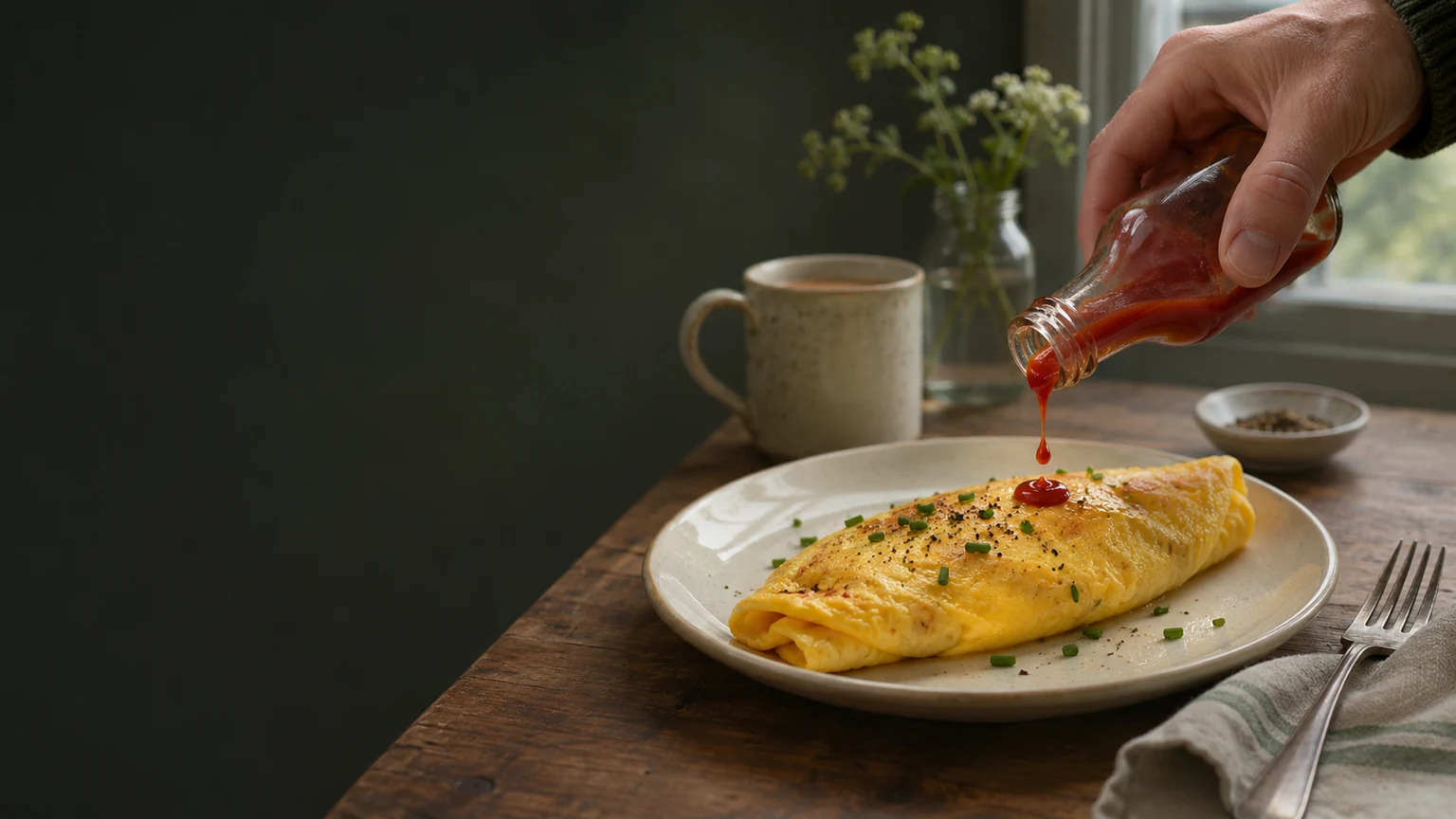
Years ago, while I was staying with a girlfriend’s family, her father offered to make me an omelette. He took some pride in his omelettes, and when he put the plate in front of me, I could see why. It looked magnificent.
I thanked him, reached for the tomato sauce and poured it on.
Oh dear.
His face told me what I’d done before either of us said a word. I liked tomato sauce with my eggs. It was still a delicious breakfast as far as I was concerned. He’d gone to the trouble of making something he was proud of, though, and I’d covered it in sauce before I’d even tasted it.
These days, when I spot a clumsy edit in a photograph I was enjoying, I think of him. Only this time the cook has put the sauce on before bringing me the plate.
What catches the eye
A little movement, soft focus or someone wandering into the edge of the frame can be part of what makes a street photograph worth looking at. I like the feeling that the world carried on around the photographer while they were taking the picture. Sometimes the person who wandered into the frame is the reason I’m still looking.
I’ve spent years editing my own photographs. A change in tone can bring your eye to an expression you might otherwise miss. A little work on the shadows can bring back the sense of the light as you remember it. When I see a fuzzy outline around somebody’s hair, though, I start tracing the outline. Whatever that person was doing a second ago has slipped my mind.
The same goes for talking about photographs. A critic can help me see something I missed, and they needn’t be a photographer to do it. I’m grateful when they can tell me plainly where their eye went and why. By the third sentence of an elaborate explanation, I sometimes find myself wishing we could just look at the picture again.
The first glance
That first glance is still my favourite part. You can know nothing about lenses and find yourself thinking about a photograph for the rest of the day. You can know everything about lenses and walk right past it. When something does make me stop, I like to give it a moment before I start asking how it was made.
I’d like to say I learnt to leave the tomato sauce alone after that breakfast. I probably just learnt to taste the omelette first.