I’d been spending my days shovelling potatoes when Ted Edgar said we were going on a pheasant shoot. I was seventeen, I loved shooting, and I took that little word we to mean I’d be going as one of the guns. I’d already pictured myself out there with the others by the time Ted told me I was going as a beater.
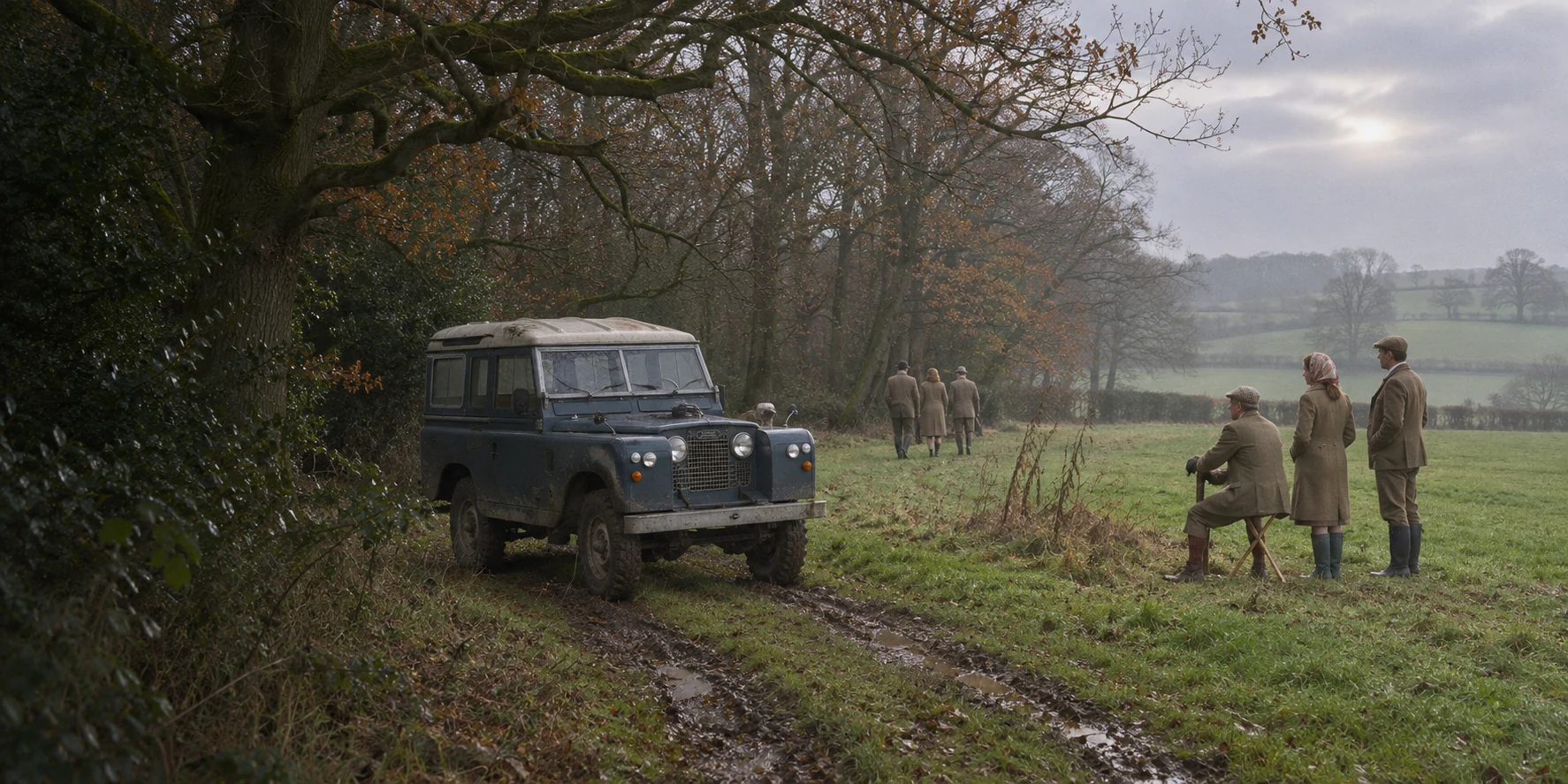
We went together in his slate-blue Land Rover, the one he used on the farm. When we got there, I was sent off with the other beaters towards the woods. Ted went the other way. The guns were having a drink and talking before the shoot. They looked quite at home with one another.
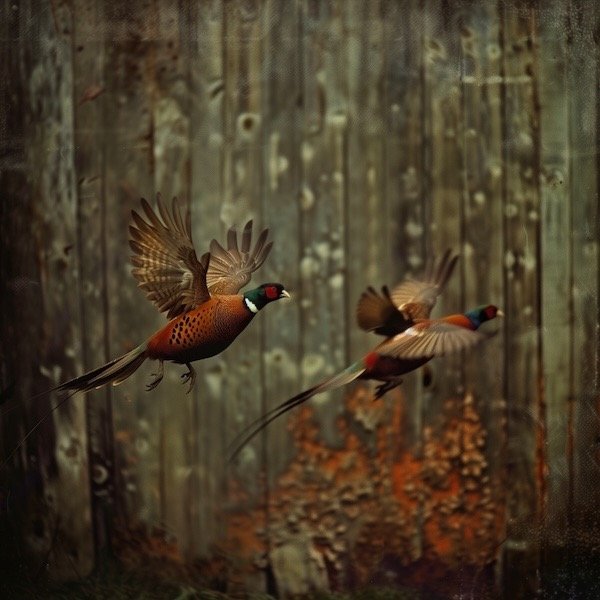
Some of the guns had shooting sticks to sit on while they waited. Some had a loader, a man who stood alongside them and reloaded for them. To me they were the gentry, the sort of people who seemed to know everybody and to be expected wherever they went. I’d arrived in the same Land Rover as Ted, and within minutes he was having a drink with them and I was heading into the woods.
That was the part that stayed with me. I felt small, insignificant and, more than anything, sad. I was a farm lad doing a day’s work, and there was nothing wrong with that. But I’d let myself imagine that I’d been invited to join them, and it hurt to find out how far I’d got ahead of myself.
That letdown put a bit more fire in me. Long after I’d left the farm, whenever I wanted to do better for myself, I could still remember what it felt like to watch Ted walk the other way. It hurts even now.
I carried a very particular picture away from that day. One day I’d have a matched pair of Cogswell & Harrison sporting shotguns. I’d be sitting on my own shooting stick at the edge of a field, with a loader beside me, waiting for the pheasants to come out. I could see the whole thing from where I stood in the mud.
I knew exactly why I wanted a Cogswell & Harrison. Growing up, I was occasionally given the rare privilege of using Uncle Bill’s hammerless side-by-side. It had been made as one of a pair, though Uncle Bill only had the one. It was the only shotgun I remember feeling so at home with that I expected to hit what I aimed at first time.
A Purdey cost considerably more and was more exclusive. You could argue it was more finely made, with even more work done to an individual order. I never wanted one, or a pair. I wanted a Cogswell & Harrison like Uncle Bill’s. If it was good enough for Uncle Bill, it was good enough for me.
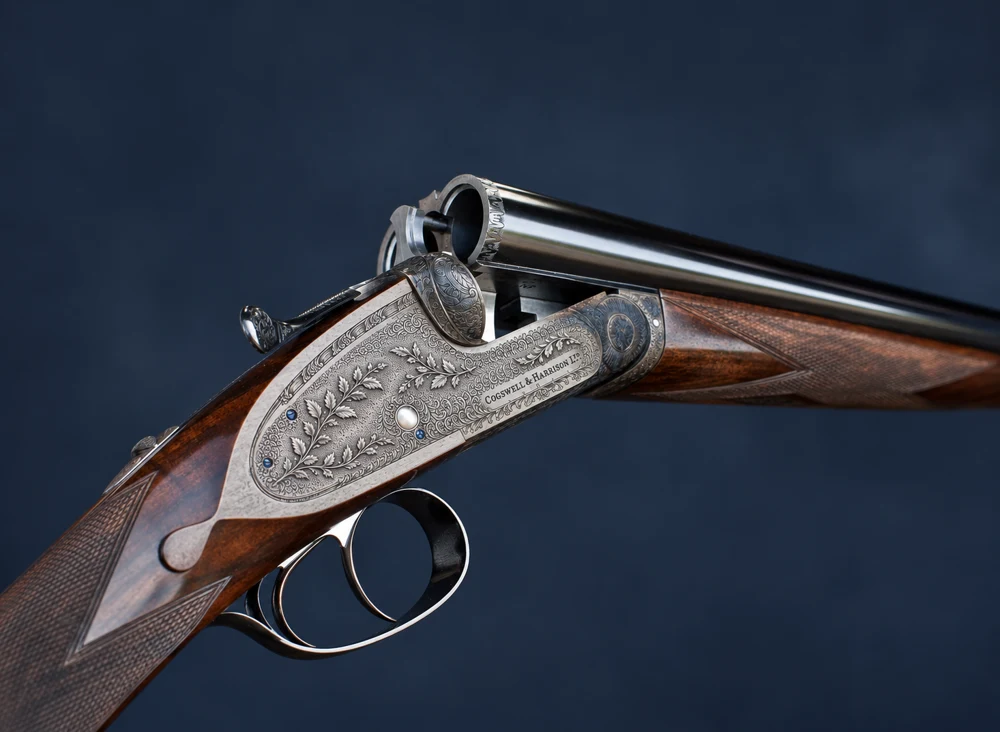
I could spend ages looking at the grain of the stock, the fine chequering on the fore-end and the engraving on the side plates. I’d think about the hours somebody had put into that one gun. Years later I found myself admiring the same care in my Rolls-Royces.
I never did get one. When Uncle Bill was getting older, I asked what he intended to do with his. I’d have liked to buy it from him, but he wanted it to go to his eldest son. My cousin went on to farm in Canada, and I sometimes wonder if the gun ended up there with him. If I had it today, I’d be content to hold it and look at it. I’d like to know what went through the maker’s mind as he worked on it.
I did get my shooting stick in the end. When Daddad died, he left Mum a little money, and she shared it among the family. I used my share to buy a good shooting stick in Australia, much like the one he’d carried in England. He used his when he went round the farms. As he got older, it gave him something to lean on and somewhere to sit when he fancied a rest.
Mine had a vinyl seat that opened out when you folded the handles apart. I took it to a leatherworker and had him make a proper leather seat for it. I still have it. I had it inscribed with a bit of advice Daddad gave me when I was young. I can still hear him saying it in his broad Derbyshire accent.
“Stand behind a shooter and in front of a shitter, and you’ll neither get shot nor shit on.”
Not long before I left for Australia, I went down through the fields at the Grange with a Mossberg .410 I’d recently bought. The River Trent marked the bottom boundary of the farm, and I was still a few hundred yards from it when I heard a crow. It was right at the top of a tree farther along the hedge.
I took a shot. The crow squawked and flapped its wings. I couldn’t tell whether I’d hurt it. A moment later it left the tree and, instead of flying away, came straight towards me.
By the time I raised the gun again, the crow was almost directly overhead. You can tell how young I was by how far I could bend backwards to see it. I couldn’t do that now. Before I could fire, a white heron came in from the side and collided with the crow. Both birds dropped out of the sky and landed a couple of yards in front of my boots.
Then there was silence. I stood there wondering if they’d killed each other. It felt like an age before either of them moved. Then they got up, shook themselves and flew off in different directions.
I’ve wondered since whether there was a message in that. Stop shooting, perhaps. I didn’t come away with an answer that day. But I never forgot standing there, waiting for those two birds to get up.
A morning by the Trent
On my second visit back to England in the 1980s, I wanted to recapture those mornings when I used to go out shooting around the farm at Barrow-on-Trent. Daddad always kept border collies to round up the cattle, so I took one of the farm dogs with me. She reminded me so much of Bet, the collie who was always at my side when I went shooting as a boy. Bet and I were a great team. This dog was generations later, but having her beside me brought those old walks right back.
I set off with the dog beside me and a gun under my arm. It was crisp, with mist still hanging over the River Trent. I could see ducks flying down by the river and hear pheasants calling from a wood a few fields away.
I was following a hedgerow with a drainage ditch at its foot when a duck burst out of it. The sudden clatter of wings made me jump. I lifted the gun without thinking. The duck was close. I could have shot it.
In that instant I thought about what might be down in the hedge. There might be eggs, or ducklings already hatched, or another bird waiting for it. Whatever was down there, I knew what pulling the trigger would mean for the duck in front of me. I let it go.
From that day on, I never shot another living thing. I still admire a beautifully made gun. I could shoot at clays, I suppose, though I don’t feel any need to. What I’d wanted back that morning was the walk itself. The dog beside me, the mist off the Trent and the pheasants calling from the woods. I’d had all of that before the duck ever left the hedge.